
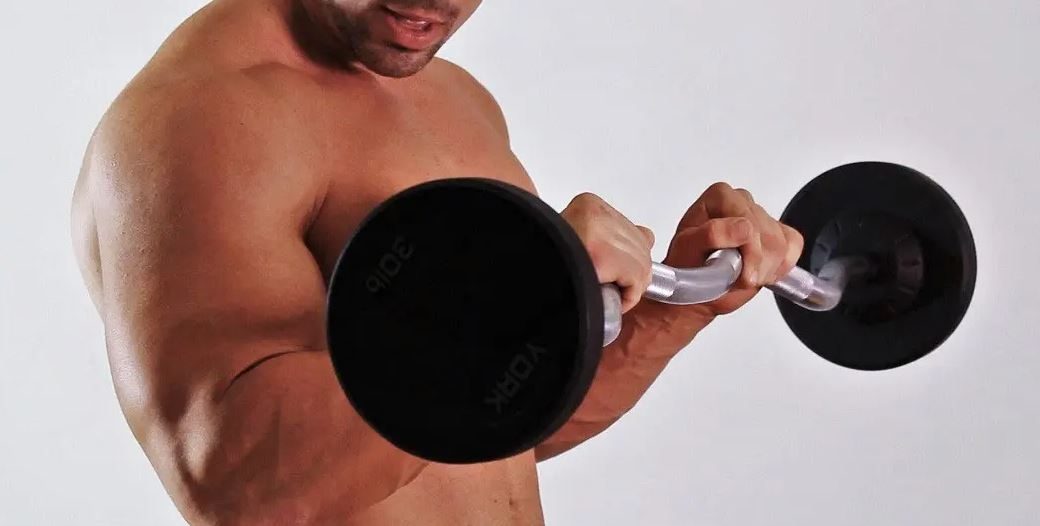
Today we will see how to perform the Biceps Curl with grip in Pronation to maximize the development of the forearms. And, obviously, along with their corresponding training tips.

We continue to introduce you to new arm exercises, this time, we will show you how to correctly execute the bicep curl with pronation grip (that is, with the palms of the hands down).
This is an interesting exercise since it not only works the biceps but to a greater extent the muscles of the forearm and wrist, which is why we should not work with very high weights if they just start training in the gym; This at least to avoid injuries that can lead to the typical and annoying tendinitis.
Like the rest of the Curl type exercises that we perform standing with bars we can use both the classic bar, and the EZ bar that for some will be much more comfortable due to the type of grip.
HOW TO PERFORM THE CURL WITH GRIP IN PRONATION?
- The exercise is performed standing, either with the classic bar or the EZ bar, and with a grip in pronation. The legs should be somewhat apart and the arms extended.
- We inspire and raise the bar by flexing the forearms.
- At the end of the movement, we must exhale and descend the forearm in a controlled manner.
- The Biceps Curl with pronation grip allows you to train several muscles of the wrist and forearm, extending the work to the biceps and the long supinator.
- Turning exercise into an ideal complement to the specific training of boxers or tennis players.
6. TIPS TO CORRECTLY PERFORM THE CURL WITH PRONATION GRIP
- We leave you some tips to apply when performing this exercise so as not to lose the proper technique and maximize muscle development.
- The trunk must remain straight throughout the movement. Do not push your hips forward to move the load, especially if you are lifting a lot of weight.
- The biceps cannot function effectively here, so it does not play a determining role in this exercise, for this reason we must use less weight than in most other biceps exercises.
- For proper movement, the flexion of the forearm should be limited, the elbow should remain immobile near the side of the body. Do not increase the load if proper technique is broken.
- The muscles of the forearm play a key role in stabilizing the elbow and wrist. As this exercise develops well in these muscles (especially over the wrist extensors), the hands will be permanently held in forearm alignment. Never bend your wrists.