Let’s analyze how to perform the heel lift to develop the calves, plus some training tips to take this exercise to its maximum level.
In a gym we can find different equipment that allows us to exploit our muscles to the maximum, helping us enormously in our growth or toning routines, but sometimes due to lack of time or money, we choose to train at home with what we have on hand or with basic equipment.
This leg exercise focuses on this last section, with the heel lift for the training of twins we can, with a minimum of space and investment, obtain very good results.
Even fit it into our gym routine helping us with the extra weight we have there.
This is an exercise that works very well the area of the triceps sural, that is, all the muscle groups that make up the well-known calf or calf.
Now, something to keep in mind is that this muscle area has the particularity of not responding with a great growth in volume in many people, although we will be able to generate a great potential for strength.
This is why we must be careful not to obsess over the development of this area unless they seek to compete in bodybuilding.
HOW TO PERFORM THE HEEL LIFT?
We place ourselves with all the weight on one leg, and resting the tip of the foot on a relatively high platform.
With one hand we support ourselves to maintain balance and with the other we either leave it free, or we can hold a dumbbell to add more load to the exercise.
Now we perform the heel lift keeping the leg extended.
To finish to finish we lower the heel to a little lower than the level of the platform and then repeat from the beginning to perform another repetition.
Keep in mind that only with long series, that is, many repetitions, we can achieve good results.
To define it in some practical way we could say that the moment in which we feel a burning sensation is when we are achieving the maximum training point of the exercise.
7. TIPS FOR PERFORMING THE HEEL LIFT WITH DUMBBELLS
Let’s see some tips to get the most out of heel lift training and thus maximize the results to form those huge calves that cost us so much.
Make sure you don’t pause at the bottom of the movement unless you’re trying to improve the flexibility of your ankles and calves.
Stay on top of the movement for at least 1-2 seconds for maximum muscle contraction.
Do not send your knees. If you do, they will accentuate the work on the soleus.
Hold your breath during the initial phase of movement to stabilize the torso.
For a different feeling and a more comprehensive workout of the area, do the exercise by varying the position of the feet, for example pointing the toes inward or outward.
Don’t bounce when you go down: Maintain a steady work rhythm throughout the exercise.
If you use very heavy loads, it can cause an injury at the time you are stretching the Achilles tendon, do not overload with a lot of weight, advance constantly but little by little.
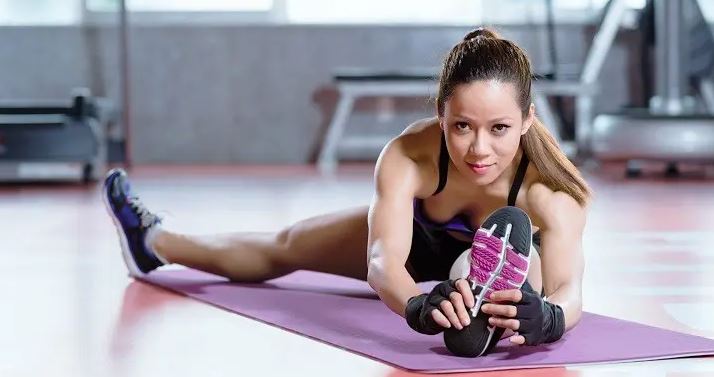
Looking for hamstring stretching exercises? Are you looking to calm those discomforts caused by muscles lacking flexibility? Do you need to improve your performance? Here’s how to perform the best exercises to stretch hamstrings!
Many people tend to exert little or nothing with hamstring stretches, almost as it happens with stretches of the quadriceps, calves and other parts of the body.
But we must be aware that this is a muscle group that contracts quickly, and depending on our posture can suffer from overwork.
Moreover, usually one does not remember this muscle group until the movement patterns are affected or the appearance of some knee pain or back pain is generated.
I know you already know! Stretching hamstrings sometimes takes work, but you should not forget that recurring injuries to these muscles are a common source of frustration for many athletes, so I will keep repeating it, you should never forget to stretch the hamstrings, nor the rest of the muscles.
So, because of the importance of this topic, I would like us to see some concepts before getting fully involved with the exercises, I invite you to read them.
Now, if you already know about the subject and just want to see what new exercises to include in your muscle flexibility development routine you can skip them and go see the exercises directly.
WHAT ARE THE HAMSTRING MUSCLES?
The muscle called the biceps femoris makes up most of the mass in the back of the thigh.
While the hamstrings consist of the semimembranous femoral, semitendinosus and biceps femoris:
The biceps femoris originates from the rough line of the femur and inserts into the head of the fibula.
The semimembranosus and semitendinosus originate in the ischial tuberosity. Inserting then into the medial tibial condyle.
The semitendinosus inserts into the medial tibia.
The three muscles act to flex the knee. While the semimembranosus and semitendinosus also act to extend the hip.
WHY IS IT IMPORTANT TO STRETCH YOUR HAMSTRINGS?
Performing at least one of these exercises is only one part of the exercise program you should do to prevent injuries.
As I said at the beginning, hamstrings are often overlooked during muscle development because they are in the back of our body.
So, the muscular imbalances related to this muscle, predispose us to injuries, even back injuries due to poor posture.
In addition, our postural habits contribute a lot to these muscles stagnant. Think about it, we lead a sedentary culture where we do a lot of things sitting or standing.
And when sitting we keep our buttocks in a state of rest causing them to become weak. So, then we must request more from our hamstrings when we are standing.
Now, when standing for long periods we tilt our hips forward, preventing the glutes from intervening, so our hamstrings must work harder.
This together is very detrimental to our posture and sports performance, in this sense this and all other stretching exercises should be done in the long term, since the goal is to achieve long-term results.
WHY DOES IT HURT WHEN STRETCHING THE HAMSTRINGS?
Why does it hurt when stretching your hamstrings? Well, these fall into the classification of “postural muscle”. And as you can imagine, postural muscles are used to maintain an upright posture.
They contain, predominantly, slow-twitch muscle fibers and are designed to function for a long period without fatigue.
Therefore, they may be prone to hypertonia. That is, these kinds of muscles tend to shorten over time unless we stretch them in their full range of motion on a regular basis.
In turn, they contain strong connective tissue fibers so that these muscles can work as strong hip extensors and knee flexors. This contributes to you noticing some difficulty when you do the stretches.
HAMSTRING STRETCHING EXERCISES
STATIC HAMSTRING EXTENSION
Hamstring stiffness can be a limiting factor for optimal performance in particular sports and an intrinsic risk factor for sports injuries.
And static stretching has been consistently reported in the literature as an effective tool in preventing injuries related to inflexibility.
Stand up, and position your back upright.
Separate the legs to a shoulder width.
Descend the trunk dropping your arms to the ground.
If you can, touch the ground or tomato ankles and hold this position while maintaining fluid and steady breathing.
HAMSTRING STRETCH WITH SUPPORT
This hamstring stretching exercise relies heavily on pelvic positioning.
If you are able to keep your back straight down while performing this stretch you will achieve a significant improvement in the results.
Stand up, and position your back upright.
Separate the legs to a shoulder width.
Descend the trunk dropping your arms to the ground.
If you can, touch the ground or tomato ankles and hold this position while maintaining fluid and steady breathing.
HAMSTRING STRETCH WITH SUPPORT
This hamstring stretching exercise relies heavily on pelvic positioning.
If you are able to keep your back straight down while performing this stretch you will achieve a significant improvement in the results.
To perform this stretching position, stand in front of a chair or table.
Place, on this, the leg to stretch.
Keep your chest and back straight.
Lean forward with your hips until you feel the stretch in the back of your thigh.
STRETCHING ON BOARD
This movement minimizes the risk of injury to the lower back and makes it easier to keep the pelvis stable throughout the movement.
Standing, and with one leg up on a bed, board or bench.
Try to keep your hip neutral (keep the knee of the other leg toward the floor).
Keep your chest upright and perform a curvature of your lower back (such as leaning forward), without allowing the knee of the stretching leg to bend upward.
HAMSTRING STRETCHING ON THE FLOOR
This is another well-known variant, ideal to perform after running and you do not have much support to do the standing position stretch.
Sit with one knee bent and the bottom of your foot against the inside of the opposite thigh.
Extend the other leg in front of you.
Maintain proper pelvic alignment to avoid lower back pain during this movement, which in turn will maximize hamstring stretching.
Finally, tilt the trunk to the side of the leg to stretch and press keeping the right time.
STRETCHING AGAINST THE WALL FRAME
The hamstring stretch in front of a wall frame is a fully validated exercise, and in turn it is easy to perform in terms of how the pelvis is held in the correct position.
This exercise is performed by keeping one leg resting on the wall and the other on the floor.
Slowly you should approach the door with both legs extended until you clearly feel the stretch on the area.
Adductor Stretching Exercises
Back Stretching Exercises
The Best Forearm Stretching Exercises
Exercises for quadriceps stretching
The Best Exercises to Stretch the Hamstrings
The Best Exercises for Stretching Calves or Calves
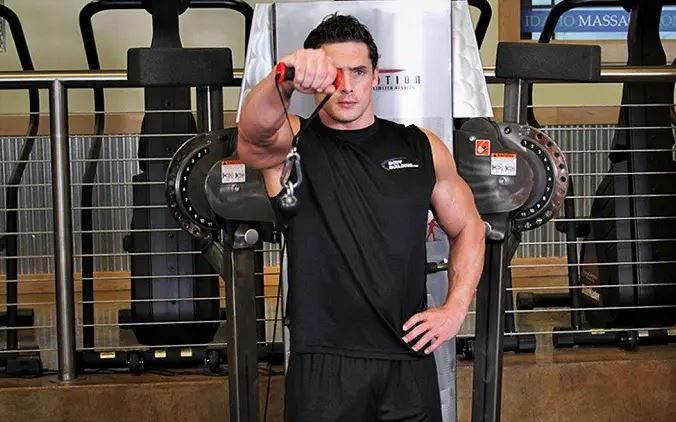
The front shoulder lift with low pulley is an excellent way to overload the frontal deltoids with constant tension in order to maximize the muscle bundle of the area.
The low pulley front lift is a variation of the front lift, one of the standard exercise movements for the shoulder. Where the lifting can be performed using a D-handle, rope or even the short bar attached to the low pulley.
That means you can perform front cable lifts with both arms at once or with only one (if you use the D-handle attachment).
In the single-arm version, you can extend the range of motion by passing the parallel at the top of each repetition. And using a pulley (instead of dumbbells or bar), you will achieve constant resistance throughout the movement.
Let’s see how to properly perform this shoulder exercise.
HOW TO PERFORM THE FRONT LIFT WITH LOW PULLEY?
To start, connect a D-handle to a low pulley cable and stand near the weight pile.
Hold the handle or handle with your right hand, with a pronation grip (palm down).
Keep your eyes forward and hold the handle right next to your thighs in order to lift the weight of the battery.
Now raise your arm almost straight until you reach head height (near shoulder height or a little higher).
Keep your elbow fixed in position throughout the movement (only a slight bend in the elbow is allowed).
Pause, then slowly lower yourself back to the starting position.
Complete the prescribed number of repetitions with your right arm, then switch hands immediately and perform the same number with your left arm.
MUSCLES INVOLVED IN EXERCISE
The front shoulder lift with low pulley focuses on developing the deltoids (mainly the anterior deltoid), as well as the clavicular head of the pectoralis major and, to a much lesser extent, the short head of the biceps brachii.
EXECUTION TIPS AND COMMON MISTAKES
Keep your body still (avoid moving your torso while lifting your weight). You can only help yourself by slightly bending your knees while performing the lift.
Don’t let the handle touch your body or the pile of weights drop sharply.
Keep your wrists straight with your palms down and keep a slight semiflexion in your elbow.
Focus on just moving the shoulder joint to complete each repetition. Remember that this is an isolation exercise, so the focus should be on technique and muscle contraction, not weight.
A common mistake to avoid is swinging your body forward to help you lift too heavy a load. In these cases, it is much better to work with less weight.
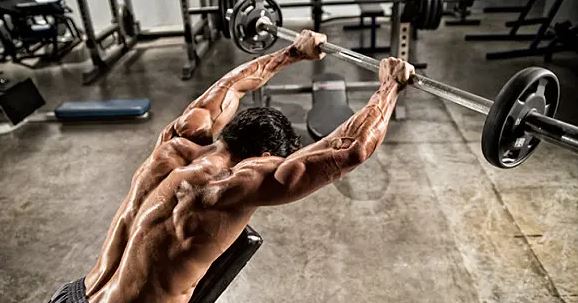
The exercise of frontal elevation of shoulders in inclined bench (what name, no?) is super effective and, because we do it lying on the bench, it is difficult to cheat. Let’s see how it is done correctly!
In article you will have the opportunity to learn the proper technique to perform the exercise correctly but before continuing let me clarify something:
Don’t attempt to perform this exercise without a specific purpose or clear training goal.
If you are training with weights to achieve for better physical condition, it is not very useful or necessary, you could even use any other type of frontal lift. Why? Because your anterior deltoids tend to make a lot of effort.
And if you do not program your routine properly, you run the risk of overtraining the area if you combine it with other exercises of other muscle groups such as chest or back.
Now, if you have a properly baked routine and your goal is to promote muscle development, then I invite you to continue reading.
HOW TO PERFORM THE FRONT SHOULDER LIFT ON AN INCLINED BENCH?
Lie on an inclined bench facing up, while holding a bar with a pronation grip (palms down).
Start with the bar just above the thighs and arms extended but not blocked, that is, do not extend it completely but you must maintain a slight flexion.
Keeping your arms in this position, contract the deltoids to lift the bar until your arms are perpendicular to the floor. A good reference point might be to stop the bar when it’s in direct line to your line of sight.
Finally, slowly lower the bar to the starting position and without letting the bar rest on the legs at the bottom perform a new repetition.
MUSCLES INVOLVED
Inclined bench bar lift focuses primarily on the frontal deltoids, although the middle and posterior deltoids and even the biceps also receive some secondary stimulation.
VARIANTS OF THE FRONT SHOULDER LIFT ON INCLINED BENCH
This exercise can also be performed with dumbbells. If you decide to go for these, perform the exercise with your palms facing each other, that is, in a neutral position, in order to train the frontal deltoids from a slightly different angle.
YOU CAN EVEN PERFORM THE UPSIDE-DOWN EXERCISE
To make this variation. Your feet should be properly supported on the floor, with your chest pressed on the bench and your chin on the top of the bench.
With a pronation grip, hold the bar or dumbbells with your hands shoulder-width apart.
The bar should hang directly from your shoulders. Raise the bar in front of you until your arms are parallel to the floor, keeping your arms straight. Hold for a second and then slowly lower the bar to the starting position.
TRAINING TIPS FOR INCLINED BENCH SHOULDER LIFTS
Practice correct technique using a light load. Keep in mind that the beginning of this exercise feels like you’re right in the middle or at the end of other lifts, so lifting the bar from this position takes a lot of effort, so start light.
Always use a slow, controlled movement and keep your arms properly locked.
Focus on moving only your shoulders: the rest of your body should be kept as still as possible and your arms should maintain the same shape throughout the movement.
We continue with new exercises for shoulders in our guide to bodybuilding exercises, the exercise that we present on this occasion is not unknown to those already experienced, we talk about the front lift for shoulders.
But if you are just starting weight training, you should know that the front shoulder lift can be very interesting to apply in your routine, whether you train in the gym or at home.
It has the three properties that we like most in Total Bodybuilding, it is simple to perform, it is economical since it does not require important facilities, and the main thing is… is extremely effective!
I am going to present two variants for this shoulder exercise, one using dumbbells to raise the arms alternately and the other using a bar raising both arms at the same time.
Now, enough preambles and let’s go into detail in each of these shoulder exercises and see how to perform them correctly to further develop our muscles.
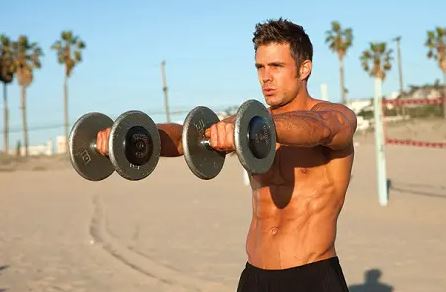
HOW TO DO THE LIFTS WITH DUMBBELLS?
The exercise is performed standing, with these separated in a width of shoulders, with the dumbbells taken in pronation or in neutral form and supported on the thighs or just next to these
We inspire and raise each arm alternately to the level of the chin (or forehead, this is not recommended for beginners) exhaling at the end of the movement.
This shoulder exercise mainly develops the anterior deltoid, the greater clavicular bundle and to a lesser extent the rest of the deltoid, which makes it especially effective for developing the frontal portion of the shoulders.
HOW TO DO THE ELEVATIONS WITH BAR?
We stand up, with the legs slightly separated from each other, with the bar taken in pronation and resting on the thighs, taking into account to keep the back straight and the abdominals contracted
We inspire and raise the bar to the height of the chin, exhaling at the end of the movement and then returning to the initial position.
At the end of the movement, we exhale and proceed to descend the bar in a controlled way to the initial position.
This exercise works mainly the anterior portion of the shoulders, the pectoralis major and to a lesser extent the trapezius.
Tips for optimal training with the front shoulder lift
We already saw how to perform these exercises, let’s focus now on taking the following tips to optimize the results.
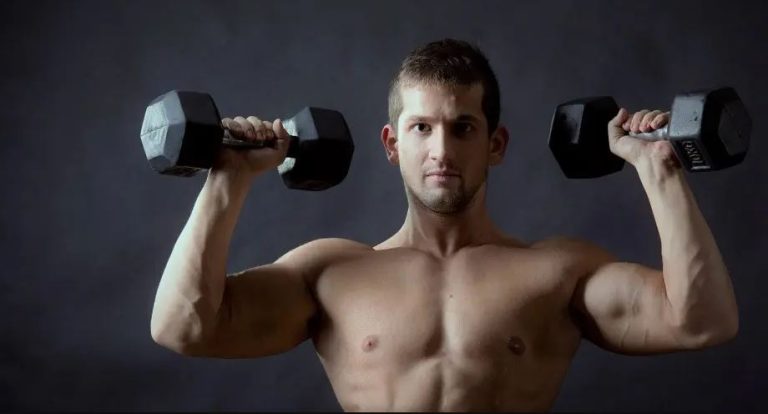
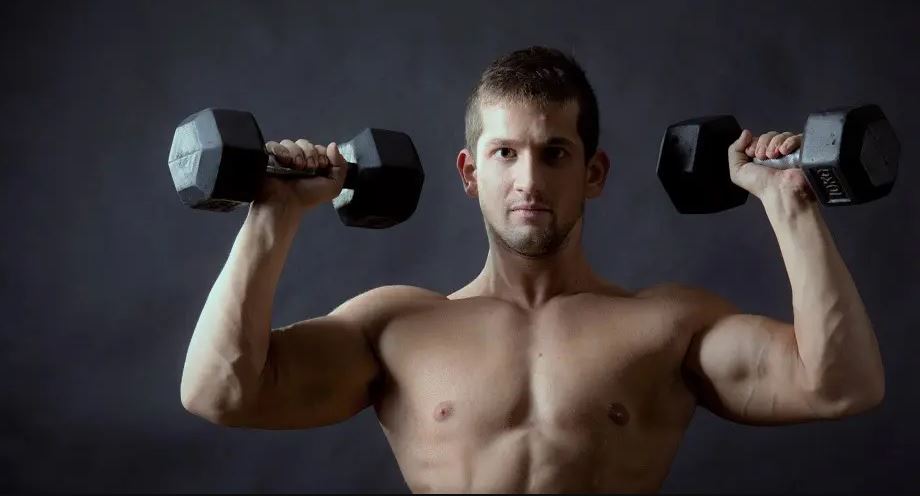
This time we bring you a more than interesting variant for shoulder work, we talk about the front press with wrist rotation, also known as Arnold’s Press, let’s see how it is done.
The front press with rotation is an exercise for shoulders that will help us work not only this muscle group but also the pectoralis major. It is very simple to perform and does not require expensive gym equipment, just two dumbbells and all our desire to obtain the best results.
Despite this, my recommendation is that only those with strong arms and at least four or six months after starting a strength training routine should incorporate Arnold’s Press.
This exercise can be performed in different ways according to the comfort of who is training or the availability of equipment, it can even be done:
Sitting against a backrest, using any seat if we do not have a bench. This prevents the back from generating excessive curvature.
Standing, as long as we control the issue of the curvature of the lumbar area.
Carrying out the exercise with the two dumbbells rising and falling alternately to the system
Or with your hands together as we will see below.
HOW TO PERFORM THE FORNTAL PRESS WITH WRIST ROTATION?
We sat on the bench and took the dumbbells at shoulder height in supination.
We inspire and raise the dumbbells until we stretch the arms completely, taking into account that we rotate the wrist in the course of the movement until it is pronated.
At the end of the movement, we exhale and proceed to bring the arms in a controlled way to the initial position.
THE MAIN BENEFITS OF THE ROTARY PRESS
One of the main benefits of the rotating shoulder press is that it covers a wide range of movements.
When the dumbbells are raised and lowered, the shoulder muscles are given a maximum movement that other shoulder exercises do not usually apply.
This extra range of motion allows for the recruitment of more muscle fibers and stronger contraction, resulting in a more intense workout.
A second benefit is that it insulates the shoulder muscles. And isolating the shoulder means that more weight is applied to the different deltoid muscles, resulting in a more effective and harder workout.
TIPS FOR PERFORMING THE FRONT PRESS WITH ROTATION
Keep your back straight, leaning against the pad throughout the exercise.
Do not stretch your legs, as you will not get the necessary support.
Do not squeeze or bend your legs back, under the bench or chair, this will disturb the balance.
Do not allow the head to protrude too much forward.
The idea is to bring the biceps to the ear and exhale as they push.
Keep your elbows slightly bent at the top of the movement and do not block your arms completely, this will help keep tension in your shoulders.
We return with more exercises for arms, but this time we will continue with the guide focusing on a new muscle group, let’s see how to train the triceps correctly thanks to the French Press on a flat bench.
This new exercise is extremely effective, but in return requires that we have some previous training and a great mastery of our body for its execution, therefore, if they have recently begun to train, my recommendation is that they leave this exercise for later.
Now, if you have been working hard in the gym for some time you can see below everything about the French Press in Flat White, I assure you that your triceps will thank you; Of course, start with little weight and increase slowly and progressively depending on the results.
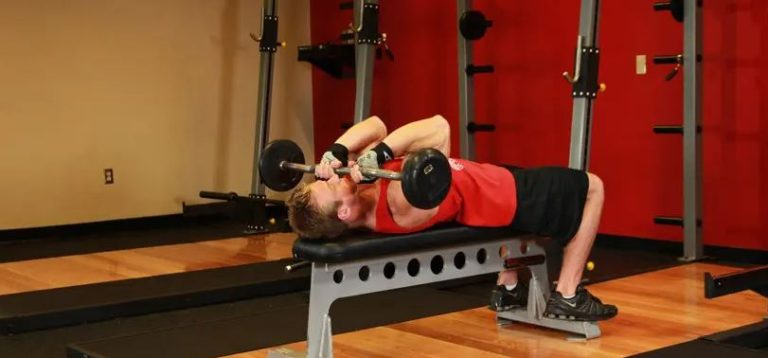
HOW TO MAKE THE FRENCH BAR PRESS?
Lying on a horizontal flat bench, we grasp the bar in pronation, with the forearms flexed and the arms vertical.
Now we inspire and make an extension of the forearms by raising the bar as shown in the image.
To finish the movement, we exhale before descending again.
It is important for a correct execution of the exercise not to separate the elbows too much so that the bar does not descend where we do not want, which will allow us to perform the two variants that this exercise has.
This exercise allows us two variants depending on where and how we finish the movement
Bar at the height of the forehead: the work on the internal and external vessel of the triceps predominates.
Bar behind the head: work predominates over the long portion of the biceps.
HOW TO MAKE THE FRENCH PRESS WITH DUMBBELLS?
We lie on a flat bench, with a dumbbell in each hand in a neutral position and the elbows flexed.
We inspire and extend the forearm, bringing the dumbbell to head height and exhaling at the end of the movement.
As you can see, two simple steps, the good thing about this exercise is that it not only serves beginners but also develops the triceps requesting in the same way the three muscles that make it up. Let’s now look at some training tips.
This exercise can also be performed alternately with each hand, or even using only one arm per set.
TIPS FOR PERFORMING THE FRENCH PRESS ON A FLAT BENCH
– Perform the exercise slowly feeling how the triceps intervene and how the effort develops on them.
– If you go for the version of the French dumbbell press, when you have reached muscle failure, try to have a training partner to help you at the end of the movement to support the dumbbells on the floor.
Never try to place them yourself on the floor, at least not while lying down.
If you are alone, bring the dumbbells to the chest and incorporate yourself with the whole body and then leave them on the floor from a more comfortable position.
– Due to the different morphologies (shoulders more or less wide, elbows more or less pronounced and wrists more or less flexible), the hands should be more or less separated at the bar and the elbows more or less open during the execution of movement.
In this sense, the use of the EZ bar allows the exercise to be performed, avoiding excessive pressure on the wrist.
– As I said before with this exercise for triceps you can lower the bar behind the head or reach the forehead.
In the first case, we will work on the long head of the triceps and in the other case, the internal and external wide triceps, we emphasize this point because you can work the triceps as through an isolation exercise and thus maximize the results.
If you are just starting with your workouts in the gym, do not load the dumbbells with a lot of weight, start training progressively to obtain better results and avoid any type of injury that prevents you from continuing to exercise your body.
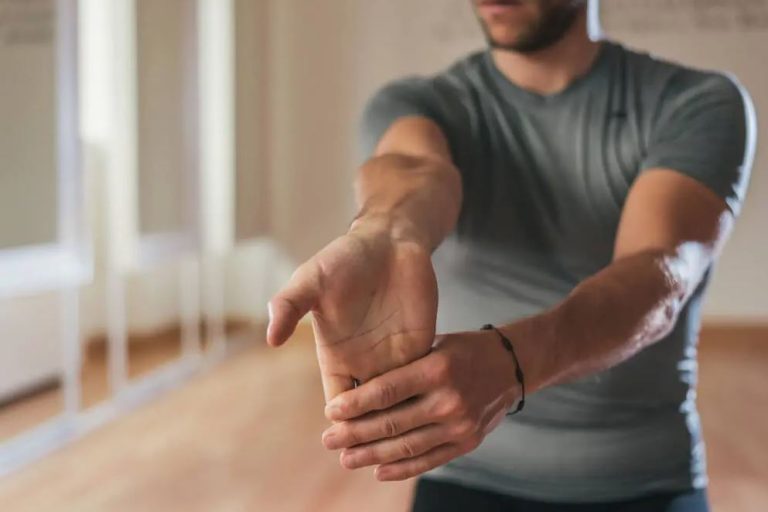
Let’s see how to stretch the muscles of the forearm to avoid losing flexibility in the flexor and extensor muscles and thus avoid pain or injury.
Regularly in the world of sports and in particular in the bodybuilding, there are many practitioners who suffer from some problem in the forearms such as tendonitis and other injuries usually caused by repetitive efforts in the area.
Tightness in the flexors or extensors of the wrist can cause microtears, inflammation, rupture of the tendon.
It can even generate conditions of feeling of loss of strength in those who use a large amount of grip force either in vibrating tools, in working with the keyboard or simply with repetitive movements of the wrist and hand.
In this series of exercises to stretch forearms you can prevent the main injuries and in turn gain flexibility for better performance in the sport you practice, whatever it may be.
FOREARM STRETCHING EXERCISES
STRETCH FOR WRIST EXTENDERS
1 From the wrist extensors, originating above the elbow, they must stretch the elbow in order to lengthen these muscles completely.
2 With the right elbow place the palm down, that is, facing the ground.
3 Then we use the other hand to pull down and out the forearm to stretch.
WRIST FLEXOR LIFT
1 In the case of wrist flexors, these originate above the elbow.
2 To stretch them we will place the right elbow, palm up.
3 Then use the other hand to pull the forearm to stretch to the ground.
STRETCHING FOR THUMB EXTENSORS
1 Take your thumb firmly with your other four fingers.
2 Then while keeping the wrist in a neutral position, turn it towards the floor.
All these exercises keep them for 30 seconds, and perform at least 2 or 3 repetitions every day to notice in a short time how it improves the flexibility of your forearms.
Losing balance between the length of the flexor and extensor muscles can result in injuries and inflammations, for example; Generating: tendinitis, tenosynovitis, or bursitis.
Stretching exercises prevent adhesions between different tendons if inflammation is introduced through microtrauma or microtrauma.
This will allow us to avoid pain in the wrist and the aforementioned injuries, which usually appear over time after performing repetitive tasks in a prolonged way.
What is the bench press for? Let me answer you with another question… Do you want to have a defined and marked pectoral? Then it’s an exercise that you can’t stop doing…
In the gym it is obvious that everyone is looking for this, but for those who train at home or just start with their routines we must tell them that it is essential to train this muscle group.
It is one of the classic exercises of weight training and that in turn, more variants presents. Don’t worry, which we will see and develop throughout the guide of exercises for pectorals, so that each user adopts the routine that suits him best.
As long as they do not neglect the final goal of the exercise… obtain a harmonious and proportionate body.
Let’s see what muscles this exercise involves…
The flat bench press works the muscles of the pectorals, triceps and deltoids, so we obtain an integral exercise in what refers to the muscular development of the trunk.
Well but … what is the correct technique to perform the flat bench press and thus obtain the best results?
HOW TO PERFORM THE FLAT BENCH PRESS?
We lie on a flat bench, taking into account to keep the buttocks supported on it, as well as the feet on the floor.
We take the bar in pronation and with the arms separated a little more than the width of shoulders.
We breathe in and lower the bar to the chest while still controlling the movement.
To finish the movement, we extend our arms completely while exhaling the inspired air.
VARIANTS FOR THE FLAT BENCH PRESS
Performing the movement with the elbows parallel to the body we can concentrate the work on the anterior deltoid, complementing the shoulder exercise very well.
If we separate the hands, we can focus the work on the outside of the pectoral.
HOW TO PREVENT INJURIES WHEN DOING THIS EXERCISE?
Avoid raising the bar too high and locking your arms when doing the chest press, this is for two main reasons.
First of all, it is a little more difficult to overload the chest muscles doing so, in addition much can develop heavier loads than would be possible if we made a total extension of the arm. So, we lose the fundamental element of pectoral muscle development.
Secondly, and at the biomechanical level, the shoulders end up suffering great stress, which could cause an injury.
The humerus (arm bone) and scapula join to form the shoulder joint, the centerpiece of the shoulder, and the area called the subacromial space that cushions the contact of these two bones.
This space is occupied by many of the tendons and ligaments that stabilize the shoulder, which can lead to joint pinching or pinching.
TIPS FOR DEVELOPING PECTORALS WITH THE BENCH PRESS
The feet should be well separated and supported on the ground (unless the program tells them otherwise), this will give your muscles a solid platform to generate the necessary pushing force.
Keep your shoulder blades retracted throughout the exercise.
Stabilize your shoulders, head and hips, this will allow you to stay in touch with the bank at all times.
Keeping your elbows out will ensure that you are using your chest more and your triceps less.
Do not bounce the bar on your chest or arch your back too much, this reduces the amount of work on the chest and you risk injuring your chest muscles.
Keep a firm grip on the bar, with the forearms almost perpendicular to the ground and parallel to each other.
Avoid dropping the weight quickly. The bar should descend slowly and in a controlled manner.
Let’s analyze how to perform the pull-ups in fixed bar with grip in supination, plus some training tips to take this exercise to its maximum level.
Previously we have seen how to perform the pull-ups in fixed bar. This time we will do the same but for the pull-ups with narrow grip in supination.
This exercise is similar to the previous one, but allows us to exert a more intense work on the biceps and dorsals.
The rest is identical to the previous one, we must even take the same precautions in terms of not performing the exercise if we just started in the training practice, since we must generate some force at the beginning to be able to execute it correctly, considering that we will raise our whole body.
Do not forget either to perform adequate breathing or to work progressively, making few repetitions at the beginning to mold the technique correctly and thus be able to increase them later progressively.
In this way you will reach high levels of training to obtain results that are not imagined today.
HOW TO CORRECTLY PERFORM PULL-UPS WITH SUPINE GRIP?
We cling to the bar taking the bar in supination, with our arms apart barely more open than shoulder width and leaving the body in suspension.
We breathe in and perform an upward traction by rising with our own strength until the head passes over the bar.
Finally, we descend in a controlled manner.
This exercise for back also works the dorsals but as we said before, the biceps and to a lesser extent the forearms and pectorals are very involved. Another integral back exercise for body development.
TIPS TO APPLY TO PULL-UPS WITH SUPINE GRIP
Let’s see some interesting tips to obtain a more effective development of the back.
Keeping the torso as straight as possible maximizes biceps stimulation and minimizes back involvement.
The upper torso should remain stable while going up and down and only the arms should move. The forearms should not do any work other than hold us from the bar.
If you are new to this exercise and do not have the strength to carry it out, use the help of some gym equipment. Doing the Chest Pulley exercise will use less weight, thus avoiding pushing all your own body weight in case you cannot do it.
More advanced weightlifters can add weight to the exercise by using a weight belt which allows the addition of weight plates to increase the force to be applied.